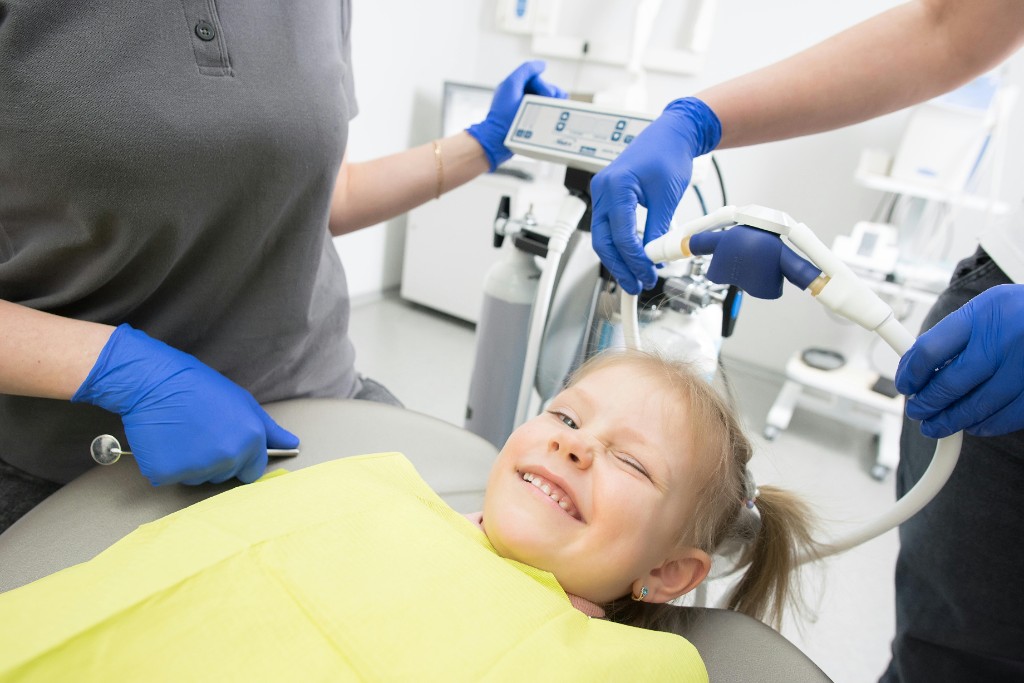
Why baby teeth must be treated
A common misconception: "Baby teeth fall out anyway — why treat them?" In fact, decay in a baby tooth means:
- A source of infection for the permanent tooth growing underneath.
- Pain and stress for the child.
- Early extraction leads to bite problems later.
- Digestive issues — the child can't chew normally.
At our clinic we treat little teeth gently and painlessly — most children leave smiling and ask to come back.
What we do for children
Prevention
Professional cleaning, fluoride treatment, fissure sealing (sealing the grooves of chewing teeth with a special material — reduces cavity risk by 3 times).
Cavity treatment
Painless removal of affected tissue, colored fillings (the child picks the color!), restoring the baby tooth to its natural shape.
Silver fluoride treatment
A method for children under 3 years old, when drilling is not yet possible. The silver compound stops cavity development. The teeth turn dark, but it's safe and temporary (until the teeth fall out).
Treatment under sedation (nitrous oxide)
"Laughing gas" — a safe method for very anxious children. The child stays conscious but relaxed and unafraid. Used worldwide.
Baby tooth extraction
Gentle removal with prior anesthesia. Many children don't even notice that the tooth has been pulled.
Pediatric orthodontics
Preventive plates and trainers to correct the bite before permanent teeth emerge. Faster and easier than braces later.
How we work with kids
- Meeting. First visit — no treatment. The child gets used to the doctor, the room, the instruments.
- Playful approach. All instruments have "kid-friendly" names: "magic mirror", "little breeze", "raindrops".
- Cartoons during the procedure. The ceiling has a screen with favorite cartoons. It's a strong distraction.
- Only modern anesthesia. First — a gel that "freezes" the injection spot. Then — a thin needle. Children say "it doesn't hurt at all".
- Gifts and stickers. Every child leaves with a present and a "I went to the dentist — I was a hero!" certificate.
Pediatric dentistry pricing
| Service | Price |
|---|---|
| Initial consultation (meet-and-greet) | Free |
| Professional cleaning | from 600 MDL |
| Fluoride treatment | from 350 MDL |
| Fissure sealing (1 tooth) | from 450 MDL |
| Silver treatment (1 tooth) | from 250 MDL |
| Cavity treatment, baby tooth | from 400 MDL |
| Colored filling | from 600 MDL |
| Baby tooth extraction | from 400 MDL |
| Treatment under nitrous oxide | +800 MDL/hour |
| Pediatric trainer (orthodontics) | from 3,500 MDL |
When to bring your child to the dentist
- The first time — after the first teeth come in (6–12 months), just for a meet-and-greet.
- Regularly — every 6 months for a check-up and cleaning.
- Unscheduled — if the child complains of pain, has dark spots, white plaque, bleeding gums or tooth trauma.
- At 6–7 years old — a mandatory orthodontic check (bite assessment).